AI's Impact on Tech Jobs: Challenges for Computer Science Graduates
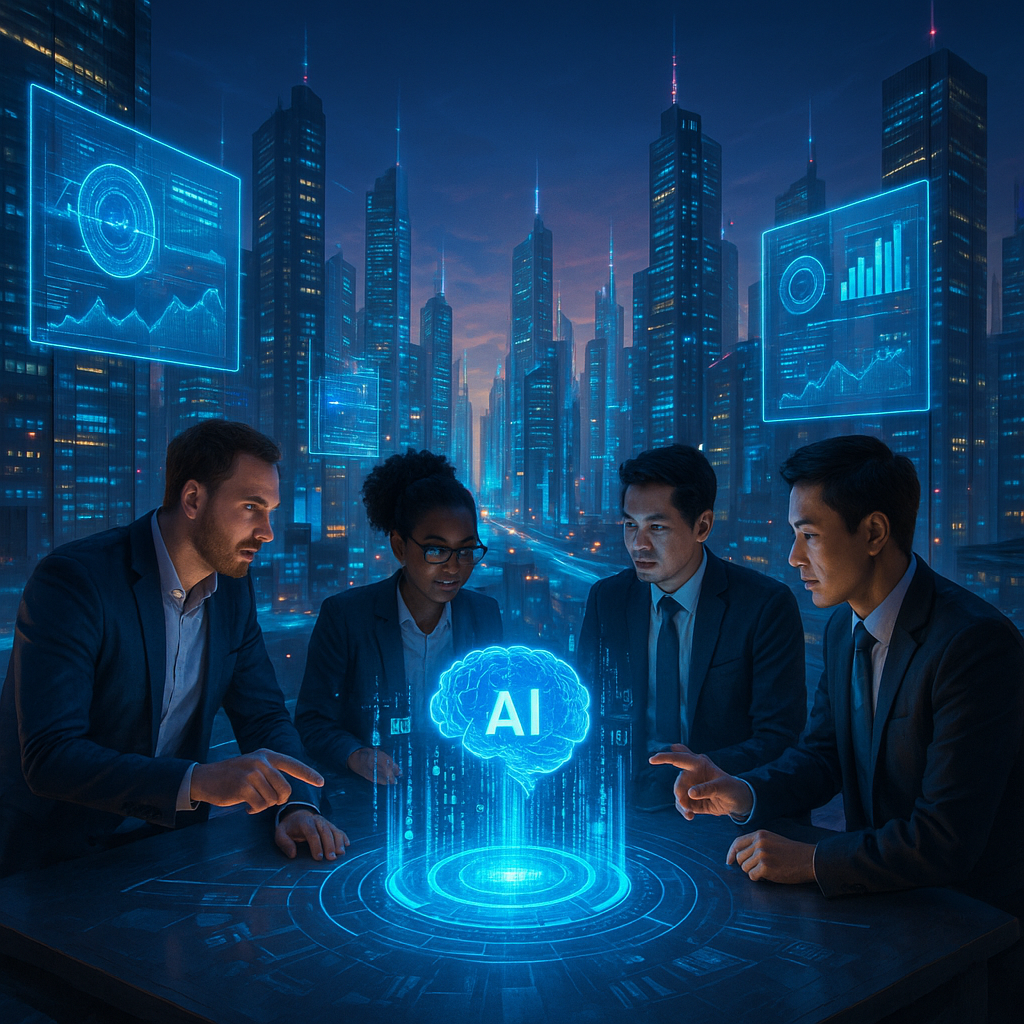
AI reshapes the tech job market, creating new roles (like prompt engineers) while challenging computer science grads. Automation, skills gaps, and intense competition define this evolving landscape.
The Impact of AI on the High-Tech Workforce and Challenges for Computer Science Graduates
Artificial Intelligence (AI) is fundamentally reshaping the high-tech workforce, ushering in a new era of innovation while presenting significant challenges. As AI technologies—ranging from machine learning and natural language processing to generative AI—become embedded in industries worldwide, they are transforming job roles, spawning new professions, and creating formidable obstacles for recent computer science graduates. This comprehensive article delves into the profound effects of AI on the high-tech labor market, the multifaceted difficulties confronting new graduates, the emergence of specialized roles like prompt engineers, their average salaries and diverse backgrounds, and how they are intensifying competition for traditional developers. It also explores the broader economic and societal implications, potential solutions, and the evolving skill sets required to thrive in this AI-driven landscape.
AI’s Transformation of the High-Tech Workforce
AI is revolutionizing the high-tech sector by automating an array of tasks that were once the exclusive domain of human developers, including coding, testing, debugging, and data analysis. Early adopters of AI tools report double-digit gains in individual task efficiency, with automation handling repetitive and time-consuming processes at an unprecedented scale. This shift is redefining the labor market, creating a polarization where high-skilled roles demanding advanced problem-solving, creativity, and strategic thinking are expanding, while medium-skilled, routine-based jobs are steadily declining. For example, positions such as software architects, AI system designers, and cybersecurity specialists are experiencing robust growth, whereas entry-level roles like basic data entry, customer support scripting, and initial coding tasks are disappearing at an alarming rate.
The integration of AI is also catalyzing the creation of entirely new job categories. Roles such as machine learning engineers, AI ethicists, data scientists, and robotic process automation specialists are becoming critical to harnessing AI’s potential across sectors like healthcare, finance, and manufacturing. A recent industry analysis estimates that AI could contribute an additional 7% to global GDP annually by 2030, underscoring its economic significance. However, this transformation comes with a significant downside: a substantial portion of the existing workforce, particularly those in traditional development roles, faces displacement risks. Research indicates that approximately 40% of global jobs, and up to 60% in advanced economies like the United States and parts of Europe, are already affected by AI, with white-collar professions—especially those involving cognitive-intensive tasks—bearing the heaviest impact.
Moreover, AI’s rapid adoption is widening skills gaps within the industry. Companies are making substantial investments in AI infrastructure, as exemplified by OpenAI’s $30 billion annual deal with Oracle for data center capacity to support its Stargate project, announced earlier this month. Yet, the global shortage of nearly 4 million developers—projected to persist through the decade—means many organizations struggle to integrate these technologies effectively. This scarcity is driving firms to prioritize employees with AI-specific expertise, leaving those with outdated or generalized skills at a competitive disadvantage. The pressure to upskill is further intensified by the need to address ethical concerns, such as bias in AI algorithms and data privacy, which require a new breed of professionals equipped to navigate these complex issues.
Challenges Facing Computer Science Graduates
Recent computer science graduates are stepping into a job market characterized by intense competition, shrinking opportunities, and rapid technological upheaval. The availability of entry-level positions has declined by approximately a third over the past two and a half years, a trend driven by automation that reduces demand for roles traditionally occupied by new grads, such as form-filling, basic coding, and technical support. This phenomenon is particularly pronounced in regions like the United Kingdom, where industry reports describe the current job market for graduates as the toughest since 2018, with unemployment rates among recent computer science degree holders reaching record highs.
One of the primary challenges is the lack of AI literacy in higher education. Many university programs have yet to fully integrate comprehensive AI training into their curricula, leaving graduates ill-prepared for the tools, techniques, and frameworks dominating the industry. This skills mismatch is exacerbated by the breakneck pace of technological change, making it difficult for students to stay current with evolving demands. For instance, while traditional courses emphasize foundational programming languages like Java or C++, employers increasingly seek proficiency in AI-specific tools such as TensorFlow, PyTorch, and large language models. This gap forces graduates to seek additional training through online platforms, bootcamps, or certifications, which can be financially and logistically challenging, especially for those burdened with student debt.
Another significant hurdle is the displacement of entry-level jobs due to AI automation. With AI agents now capable of performing human-level cognitive tasks autonomously—such as writing code, generating reports, and analyzing datasets—roles that once served as stepping stones for new developers are vanishing. This shift compels graduates to pursue advanced skills early in their careers, often requiring further education, specialized certifications, or hands-on project experience, all of which demand time and resources many cannot readily access. The situation is further complicated by the reliance on H-1B visa holders, who fill 82% of new tech jobs according to recent X posts, intensifying competition and limiting opportunities for domestic graduates. This trend underscores the urgent need for rapid reskilling and adaptation to remain competitive.
Additionally, the pervasive use of AI in job applications—such as computer-drafted resumes, cover letters, and even interview simulations—has led employers to scrutinize human authenticity more closely. Graduates who rely heavily on AI assistance without a deep understanding of its limitations may find their applications flagged or rejected, adding another layer of difficulty. Mental health concerns are also rising among graduates, with studies linking job market uncertainty and skill obsolescence to increased stress and burnout, further complicating their transition into the workforce.
The Rise of Prompt Engineers: Salaries, Backgrounds, and Competition
Among the new roles emerging from AI’s ascent, prompt engineering has gained prominence as a specialized and lucrative profession. Prompt engineers are tasked with designing, refining, and optimizing the input prompts used to guide AI systems, ensuring accurate, relevant, and contextually appropriate outputs. This role bridges the gap between AI models and practical applications, playing a pivotal role in enhancing the performance of chatbots, content generation tools, and automated decision-making systems. Its importance is underscored by the growing reliance on generative AI across industries, from marketing to software development.
Average Salaries
Prompt engineers command highly competitive salaries due to their specialized skill set and the critical nature of their work. In the United States, the average annual salary for a prompt engineer ranges from $120,000 to $150,000, with experienced professionals in tech hubs like Silicon Valley, San Francisco, and Seattle earning upwards of $200,000. In other regions, such as Europe and Asia, salaries typically range from €90,000 to €130,000 or equivalent, depending on local market conditions and demand. These figures reflect the high value placed on their ability to maximize AI efficiency, with top-tier candidates at leading firms like Google, OpenAI, and Microsoft occasionally exceeding $250,000 with bonuses and stock options.
Backgrounds
Prompt engineers hail from diverse educational and professional backgrounds, reflecting the interdisciplinary nature of the role. Many hold undergraduate or graduate degrees in computer science, data science, linguistics, or cognitive science, providing a strong foundation in coding, AI frameworks, and human-computer interaction. Prior experience as software developers, data analysts, or natural language processing specialists is common, equipping them with practical skills in programming languages like Python, R, or JavaScript, as well as familiarity with AI libraries such as Hugging Face Transformers and OpenAI’s API.
Increasingly, professionals transition into prompt engineering through online courses or certifications in machine learning, AI ethics, and natural language processing, offered by platforms like Coursera, edX, and Udemy. A solid grasp of mathematics—particularly statistics, linear algebra, and probability—is also prevalent, enhancing their ability to fine-tune algorithms and interpret AI behavior. Some prompt engineers bring unique perspectives from fields like psychology or creative writing, leveraging their understanding of human cognition and language to craft effective prompts. This diversity fosters innovation but also means the role attracts talent from outside traditional tech pipelines, broadening the competitive pool.
Competition for Traditional Developers
The rise of prompt engineers is creating significant competition for traditional developers, reshaping the dynamics of the high-tech workforce. Unlike conventional coding roles that focus on writing and debugging code from scratch, prompt engineering emphasizes optimizing AI interactions, a skill set that complements but often overshadows traditional development in terms of compensation and demand. This shift is pushing developers to upskill, learning AI tools and techniques to remain relevant. Traditional developers, especially those with decades of experience in manual coding or legacy systems (e.g., COBOL or early Java frameworks), face particular challenges adapting to this paradigm, as their expertise may not align with the AI-driven future.
The wage premium for AI-related skills—approximately 11% within the same firm and 5% within the same job title—further incentivizes this transition, putting pressure on older-school developers to compete. Prompt engineers’ ability to enhance AI productivity without extensive coding knowledge challenges the traditional developer’s value proposition, as companies increasingly prioritize outcomes over process. Posts on X reflect a growing sentiment that entry-level jobs are disappearing rapidly, with new roles like prompt engineering attracting talent away from conventional paths. This rivalry is forcing a reevaluation of career trajectories, with many developers pursuing additional training or pivoting to AI-adjacent roles to stay competitive.
The competition is also evident in hiring trends, where firms favor candidates with prompt engineering skills for roles that once went to generalist developers. This shift is prompting industry leaders to advocate for reskilling programs, with companies like IBM and Microsoft offering free or subsidized courses to help incumbent developers transition. However, the pace of change means that not all can keep up, particularly those in mid-career who may lack the time or resources to retrain, exacerbating the divide between AI-savvy and traditional workforces.
Broader Implications and the Path Forward
The impact of AI on the high-tech workforce carries far-reaching economic and societal implications. On the positive side, it drives innovation and economic growth, with projections suggesting a $15.7 trillion boost to the global economy by 2030. However, it also risks widening income inequality, as high-paying AI roles concentrate wealth among a skilled minority, while displaced workers struggle to find new opportunities. The displacement of jobs, particularly in white-collar sectors, could lead to social unrest if not addressed through policy interventions like universal basic income or enhanced retraining initiatives.
For computer science graduates, the path forward lies in embracing continuous learning, pursuing interdisciplinary skills, and gaining hands-on experience through projects, internships, or open-source contributions. Proficiency in AI tools, cloud computing, and data ethics will be essential, as will soft skills like adaptability and problem-solving, which remain difficult for AI to replicate. Employers and educational institutions must collaborate to bridge the skills gap, offering reskilling programs, updating curricula to include AI literacy, and fostering partnerships with tech firms to provide real-world exposure.
In this evolving landscape, adaptability is paramount. The competition between prompt engineers and traditional developers underscores the need for a workforce that can collaborate with AI rather than be replaced by it. Governments can play a role by incentivizing tech education, subsidizing training programs, and regulating AI deployment to ensure fair labor practices. As AI continues to mature, those who master its tools, understand its ethical dimensions, and adapt to its demands will shape the future of technology. Conversely, those who lag risk being left behind in a rapidly transforming industry, highlighting the urgency of proactive adaptation in the face of AI’s relentless advance.
- Primary Technology Research & Architecture Dispatch TrendingTech Intelligence
Want real-time AI & tech intelligence dispatches?
Join the official TrendingTech Daily Telegram channel for breaking research, model launches, and market analysis.