Vibe Coding: AI-Powered No-Code Development Takes Off
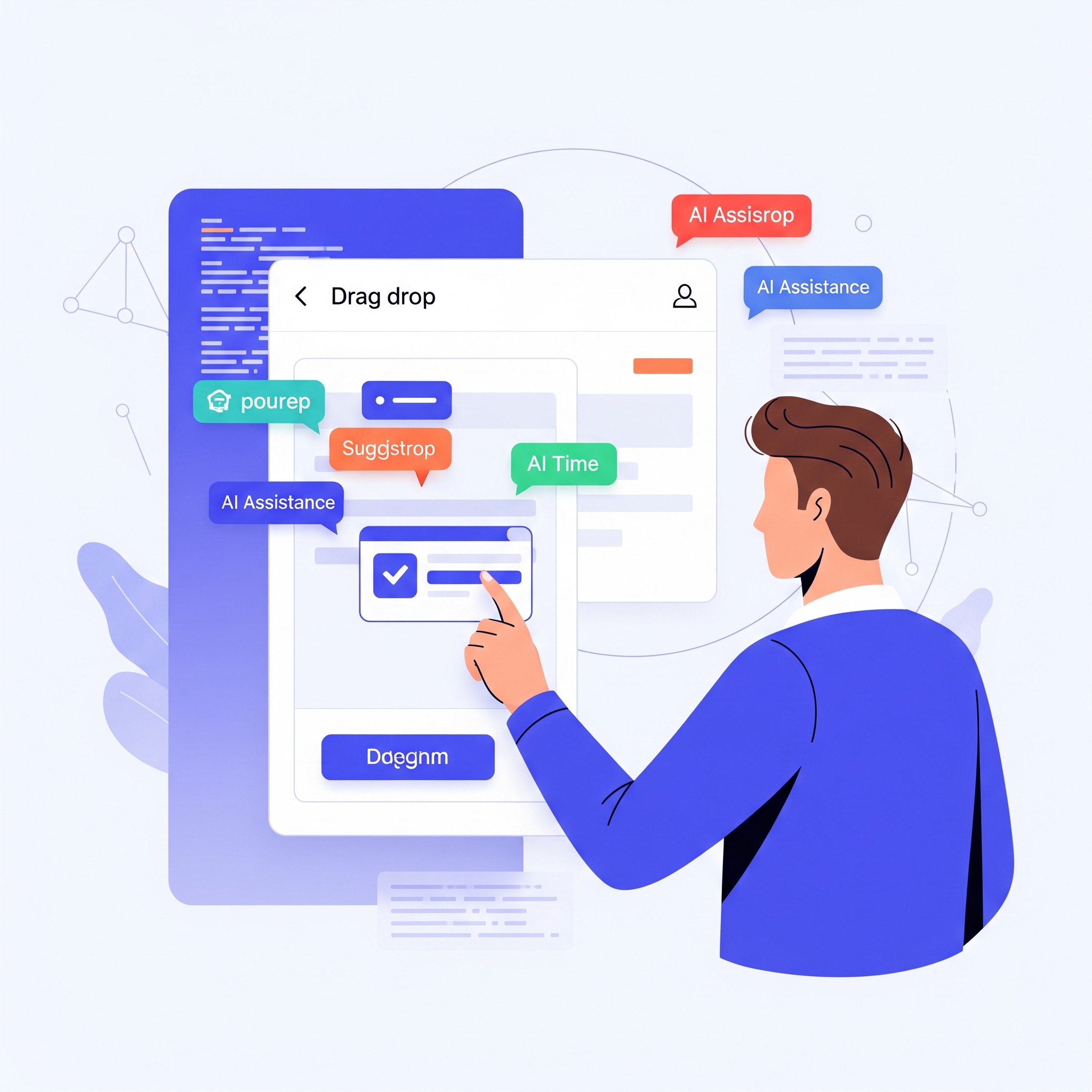
AI-powered 'vibe coding' uses platforms like Make, n8n, and Lovable to build apps without writing code, boosting speed and accessibility but with scalability limitations.
Vibe Coding with AI: Programming Without Writing Code Using Make, n8n, and Lovable
Vibe coding with AI, often synonymous with no-code or low-code programming, is an innovative approach that allows individuals to create applications, automate workflows, or build digital experiences using intuitive, AI-driven platforms without writing traditional code. The term "vibe coding" emphasizes the creative, flow-driven, and accessible nature of this process, where users focus on their vision or "vibe" while AI and no-code tools handle the technical details. This article explores how vibe coding with AI works, focusing on three powerful platforms—Make, n8n, and Lovable—that enable this process, their underlying technologies, and their impact on modern development.
What is Vibe Coding with AI?
Vibe coding with AI enables anyone, regardless of technical expertise, to build software by leveraging visual interfaces, natural language inputs, and AI automation. It prioritizes creativity, rapid iteration, and a seamless workflow, allowing users to translate their ideas into functional applications in a state of flow, often described as being "in the zone." This approach is particularly appealing to non-technical users like entrepreneurs, designers, or marketers, as well as developers seeking faster prototyping.
Key characteristics include:
- Visual Development: Drag-and-drop interfaces, flowcharts, or templates replace manual coding.
- AI Assistance: AI interprets user inputs (e.g., text prompts, designs) to generate code or workflows.
- Creative Freedom: Users focus on aesthetics, user experience, or functionality without worrying about syntax.
- Community Engagement: Platforms like X foster communities where users share projects, workflows, and inspiration, often tagged with #NoCode or #VibeCoding.
Vibe coding with AI is gaining popularity, as seen in posts on X where developers highlight tools like Lovable and n8n for their ability to create “wild” no-code stacks for micro-SaaS or automation. This article focuses on Make, n8n, and Lovable, three platforms that excel in enabling vibe coding with AI.
How Vibe Coding with AI Works
Vibe coding with AI combines user-friendly interfaces, AI algorithms, and pre-built components to streamline development. Here’s how it works across Make, n8n, and Lovable:
1. Inputting the Vision
Users express their project ideas through intuitive inputs:
- Natural Language: Lovable allows users to describe apps in plain English (e.g., “Build a chat interface with a purple theme”).
- Visual Interfaces: Make and n8n offer drag-and-drop flow builders where users connect apps or services visually to create workflows.
- Templates: All three platforms provide pre-built templates (e.g., e-commerce sites, automation flows) that users customize to match their vibe.
AI, often powered by large language models (LLMs) or visual recognition, interprets these inputs to generate code, workflows, or designs.
2. AI-Driven Generation
AI translates inputs into functional software or automation:
- Code Synthesis (Lovable): Lovable uses AI to generate HTML, CSS, JavaScript, or React code based on prompts. For example, a user can request a “login page with email authentication,” and Lovable creates the frontend and integrates with backends like Supabase.
- Workflow Automation (Make, n8n): Make and n8n use AI to suggest or build automation flows. For instance, n8n can create a webhook that processes data from a Lovable frontend and returns AI-generated responses.
- Error Handling: AI in these platforms detects and suggests fixes for issues, such as misconfigured webhooks or unresponsive designs.
For example, a user might use Lovable to create a frontend for an AI coaching app, n8n to process user inputs via a webhook, and Make to automate notifications, all without coding.
3. Iterative Refinement
Vibe coding emphasizes rapid iteration:
- Real-Time Previews: Lovable’s New Tab and Mobile Views let users see changes instantly, while Make and n8n show live workflow outputs.
- AI Suggestions: Lovable suggests UI improvements, while Make and n8n recommend additional automation steps based on context.
- User Feedback: Users tweak designs or flows visually, maintaining the creative flow. For instance, Lovable allows reverting to previous versions if changes don’t align with the vibe.
4. Deployment and Sharing
Deployment is streamlined:
- One-Click Hosting: Lovable publishes apps to subdomains or custom domains, while Make and n8n deploy workflows instantly.
- Community Sharing: Users share projects on X, GitHub, or communities like AI Automation Society, inspiring others.
This process enables users to go from idea to deployed app or workflow in minutes, embodying the spontaneous, vibe-driven ethos.
Platforms for Vibe Coding with AI
Make, n8n, and Lovable are standout platforms for vibe coding with AI, each offering unique strengths:
1. Make
- Why It’s Great for Vibe Coding: Make is a visual automation platform that connects apps and services to create complex workflows. Its drag-and-drop interface and AI-driven suggestions make it ideal for automating tasks without code, aligning with the creative flow of vibe coding.
- Features: Visual workflow builder, app integrations (e.g., Google Sheets, Slack), AI-powered automation suggestions.
- Use Case: Automate sending emails based on user inputs from a Lovable app, using Make to connect the frontend to a mail service like SendGrid.
- Link: make.com
2. n8n
- Why It’s Great for Vibe Coding: n8n is an open-source workflow automation tool that combines no-code simplicity with code-level flexibility. Its node-based interface and webhook support make it perfect for integrating AI agents with frontends like Lovable.
- Features: Webhook integration, AI agent workflows, support for JavaScript/Python for advanced users.
- Use Case: Build an AI agent that processes user inputs from a Lovable chat interface and returns responses via a webhook.
- Link: n8n.io
3. Lovable
- Why It’s Great for Vibe Coding: Lovable is an AI-powered app builder that generates frontends from natural language prompts. Its real-time editing and integrations with tools like n8n and Supabase make it a vibe coder’s dream for rapid prototyping.
- Features: AI-driven code generation, GitHub/Supabase integration, responsive design tools.
- Use Case: Create a SaaS landing page or chat interface in minutes, connected to n8n for backend automation.
- Link: lovable.dev
4. X Platform
- Why It’s Great for Vibe Coding: X is a hub for discovering no-code tools, sharing AI-driven projects, and finding inspiration. Posts highlight Lovable and n8n as a “powerful no-code stack” for micro-SaaS and automation, fostering a community of vibe coders.
- Link: x.com
How Make, n8n, and Lovable Work Together
A powerful vibe coding stack involves combining these platforms:
- Lovable for Frontend: Users create a visually appealing interface (e.g., a chat app) using natural language prompts. Lovable generates the code and supports integrations like Supabase for authentication or data storage.
- n8n for Backend Automation: n8n handles backend logic via webhooks. For example, a user input from Lovable’s frontend triggers an n8n workflow that processes data with an AI agent (e.g., Claude) and sends responses back.
- Make for Additional Automation: Make connects external services, such as sending notifications or updating databases, to complete the workflow.
For instance, a tutorial demonstrates building an AI coaching app where Lovable creates the frontend, n8n processes user inputs via a webhook, and Make automates email notifications—all without coding. This stack allows users to create complex apps, like a “JARVIS” AI assistant, in hours.
Benefits and Challenges
Benefits
- Accessibility: Non-technical users can build apps or automations, as seen in Reddit discussions where users with “zero coding background” create frontends with Lovable and n8n.
- Speed: Projects are completed in minutes or hours, not days. A Lovable frontend can be built in five minutes, compared to days for manual coding.
- Creativity: The visual, AI-driven approach encourages experimentation, aligning with the vibe coding ethos.
- Community: X and communities like AI Automation Society share templates and workflows, enhancing collaboration.
Challenges
- Limited Customization: No-code platforms may restrict advanced functionality, requiring code for complex features.
- Platform Dependency: Users rely on proprietary tools, which may limit portability or increase costs.
- Learning Curve: While intuitive, mastering these platforms takes practice, especially for complex integrations.
- Scalability: No-code apps may face performance issues at scale compared to custom-coded solutions.
How to Start Vibe Coding with Make, n8n, and Lovable
- Choose Your Tools: Start with Lovable for frontends, n8n for backend automation, and Make for additional integrations.
- Define Your Vibe: Decide on your project’s aesthetic or purpose (e.g., a neon-themed chat app or an automated workflow).
- Use AI Features: Leverage Lovable’s natural language prompts, n8n’s webhook automation, and Make’s app connectors.
- Engage with Communities: Join X or the AI Automation Society to share projects and learn from others.
- Iterate and Deploy: Build a prototype, refine it visually, and deploy using platform hosting.
The Future of Vibe Coding with AI
Vibe coding with AI is set to evolve with advancements in AI models and no-code platforms. Tools like xAI’s Grok could enhance real-time code generation and debugging, while platforms like Make and n8n may integrate more AI-driven features. Virtual reality no-code environments could create immersive vibe coding experiences, further blending creativity and technology.
The growing popularity of this approach, as seen in X posts praising Lovable and n8n for “unlocking” no-code potential, suggests a shift toward accessible development. As communities share open-source templates (e.g., n8n’s 1,500-flow repo), vibe coding will empower more people to create innovative solutions.
Conclusion
Vibe coding with AI, powered by Make, n8n, and Lovable, transforms software development into a creative, accessible, and flow-driven process. By combining Lovable’s AI-generated frontends, n8n’s powerful automation, and Make’s seamless integrations, users can build apps or workflows without writing code. Whether you’re creating a SaaS landing page, an AI assistant, or an automated workflow, these platforms enable you to focus on your vision while AI handles the rest. Join the vibe coding movement on X, experiment with these tools, and turn your ideas into reality—no code required.
- Primary Technology Research & Architecture Dispatch TrendingTech Intelligence
Want real-time AI & tech intelligence dispatches?
Join the official TrendingTech Daily Telegram channel for breaking research, model launches, and market analysis.